Author: emdillon

The final samples

Today was our last day of diving. It was bittersweet, for sure. We motored around the reef terrace in search of patches of sediment. While we were limited by the placement of moorings and inability to anchor (not allowed on the terrace for good reason), we still managed to collect sediment from one more section of the reef. I was quite pleased with our haul! Below is our final sample count:

  • 14 collection sites, 7 on the reef terrace and 7 in the lagoon
  • 10 replicate sediment samples taken at each site, except for one which had very little sediment available to sample
  • 131 bulk bags total, weighing roughly around 250lbs

The next challenge: getting it all off the tiny atoll on the weight-restricted charter flights.

dsc07555

Sample bags drying in the sun to reduce their weight and save us money.

Exploring the hospital: a relic of a bygone age

Tromping through the jungle and forging our own path through the thick vegetation, we must have walked right past the old WWII-age military hospital a handful of times without even knowing it was there. This time, though, we were on a mission to find it.

We came across a machete-cut path through the Cocos seedlings and followed it until we practically ran into the structure itself. It was completely overgrown and barely discernible from the surrounding trees. We followed the concrete perimeter to the entrance and ducked inside. It was as if we had been swallowed by pitch-black darkness. We switched on our headlamps to illuminate our grim surroundings. Our voices echoed eerily in the domed entryway.

The structure was impressively still intact (the ceiling was only falling down in one spot), although some of the interior had been gutted. The building was massive, possessing at least two wings and three entry points. You could still walk down what would have been the hallway and glance into the various rooms, now lacking walls or doors. Rusted cabinets and beds lay strewn about, lost in time. It was haunting to imagine the men that used to inhabit this place: doctors strolling down the corridors and patients lying wounded in the beds. Now, all of this history had been swallowed up by the jungle, and the only remaining denizens are cane spiders and several-foot-long coconut crabs. Yet another example of nature taking back the atoll for its own.

A day in the life

6:30am – Alarm rings. Go for a run or do some work in the lab before breakfast.

7:00am – Load the boat and prep SCUBA and sampling gear.

7:30am – Breakfast in the galley. Pack lunches and fill water bottles. Sunscreen up!

8:30 or 9:00am – Depart the dock for our first site.

9:30am – Arrive at our first site. Check out the substrate suitability on snorkel. Dana and I don our SCUBA gear and jump in.

10:20am – Finish sampling our first site. Depart for our second site.

10:50am – Arrive at our second site. Snack time!

11:00am – Scope out site and start sampling.

11:40am – Finish sampling our second site.

12:00pm – Lunch on the boat. Enjoy the scenery.

12:30pm – Move to our third site (or back to the station if only sampling two sites).

1:00pm – Arrive at final site for the day. Scope out on snorkel.

1:15pm – Start collecting sediment on SCUBA.

1:50pm – Finish collections. Head back to the dock for the day.

2:30pm – Arrive at the station. Wash and store gear. Carry samples to the lab to dry.

3:00pm – Afternoon coffee break or snack time.

3:30pm – Record GPS points and sampling notes for the day. Select sites and make a plan for tomorrow’s sampling. Arrange boat usage with the station and other researchers.

4:00-6:30pm – The work doesn’t end here. Help the other UCSB team sort insects, write a grant proposal, read papers for the class I’m supposedly taking on campus, edit a manuscript, etc. Put on a sparkly gold flash tattoo with the rest of the team for field solidarity.

6:30pm – Dinner in the galley. Watch the sunset. Don’t forget your headlamp!

7:30pm – Stroll back to the lab. Or perhaps to the yacht club for some evening fun. Pet a manta ray.

9:00-10:30pm – Bedtime. Maybe see a fluorescent blue-purple coconut crab on the way back to my cabin. Be careful, as it could pinch your finger off.

[Repeat.]

A jaunt around camp

For a remote tropical island, Palmyra’s field camp is quite nice. First, we are fortunate enough to eat fantastic food… when the vegetables actually make it on the plane from Honolulu. For example, Alex, one of the chefs, made breadfruit pita and a heart of palm salad for dinner with sweet potato haupia pie for dessert one day. I wasn’t expecting to get to try new foods while in the field, so this was a welcomed surprise! Second, there are showers and washing machines, although water is limited as we in a drought and the field station is completely reliant on rainwater. Cleaning chores rotate between groups of researchers. Third, we stay in small but cozy cabins shared between two researchers. Some of them are even waterfront, although the donors were assigned to those when they flew down to visit.

With regard to the science, there is both a wet and dry lab to process samples on the island. One researcher even brought a tiny -80C freezer to keep samples cold before being transported back to Hawaii. We have access to four lagoon boats (shared between all researchers on the island), and there is also a larger boat for diving on the forereef. There were on average 23 people total during my stay, so resources weren’t spread too thinly.

When you’re not working – although it’s a pretty constant state of working – you can explore the main island Cooper and the adjacent island Strawn, stroll to North Beach, go swimming at the swimming hole, relax in the galley or yacht club, or run on the runway. We even have science presentations and movie nights in the yacht club and bonfires on North Beach occasionally.

Sunrises, sunsets, and avian friends

The sun rises a little before breakfast, so I occasionally head over to North Beach with my cup of coffee for a moment of tranquility before the hustle and bustle of the day begins. Later, the sun sets just as we’re having dinner. First, this means that you are in for a pitch-black stroll to the lab if you forget your flashlight or headlamp. However, it also means that we have a spectacular backdrop after a long day of field work. Rayn, the resident rescued red-footed booby, will occasionally sit outside and enjoy the sunset with you when she’s not begging for attention. Today, she’s the star of the blog post.

Gateway to the lagoon

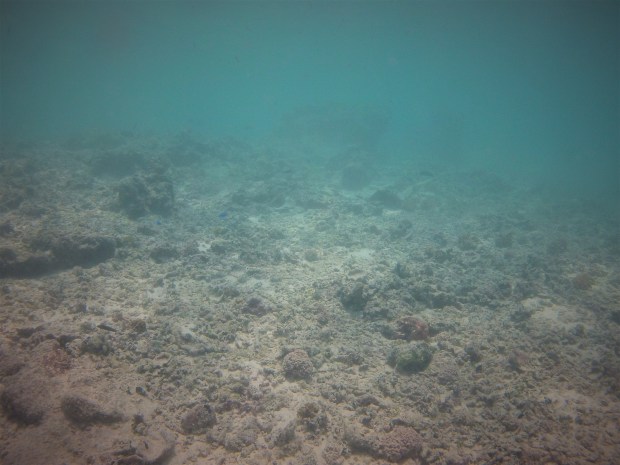
On a good day, you can see the bottom of the channel from the boat. Today was not one of those days. What’s lurking out there beyond the edge of the murk?

DCIM100GOPRO

The channel has been identified as the main elasmobranch highway between the reef terrace and the lagoon. Acoustic receivers and cameras placed along the edges of the channel have pinged the positions of many a manta ray or shark cruising through, even documenting a “shark rush hour” in the evening. There’s also lore of a lone gray reef shark known as “The Gatekeeper” that supposedly patrols the entrance to the lagoon. Obviously it’s a very sharky place.

While sampling, we were easily circled by ten blacktip reef sharks, although not all at the same time. I would shovel a couple of scoops of sand into my bag, glance hurriedly over my shoulder into the heart of the channel, and catch the eye of several blacktips that were checking me out. We would politely exchange glances, and then they would meander off into the murk. Dana and I also spotted a gray reef shark from the boat immediately after getting all of our gear back aboard. While the paranoia of something really big coming up behind me may linger in the back of my mind, I look forward to these encounters. It was incredible to get to dive with these majestic creatures and be a part of their world, if only for an hour at a time.

Penguin Spit Round Two

In the afternoon, we returned to a more sheltered, inland portion of Penguin Spit. This section of the reef is located between the lagoon flat and Penguin Spit Middle, where we sampled last week, and is home to large patches of sand and corallimorph surrounded by corals. Needless to say, we had much better luck collecting sand here than at Crazy Corals. The patches of sediment were even large enough to actually kneel in without damaging the surrounding corals, which certainly made the task of digging into the sand easier. The alternative is either hovering over the corals or inverting yourself in a sort of awkward anti-gravity handstand to access the substrate without touching the corals (which harms them). However, in these sampling positions, it is difficult to exert enough leverage to insert your shovel into the sand without solely being pushed backwards or upwards.

While the sediments here were heavily bioturbated, meaning that we had to carefully search for good places to sample, the actual act of filling our sampling bags with sand went pretty quickly. We were able to collect all 10 replicate bulk bags in about 20 minutes. Another site down!

Crazy Corals!

We scoped out a reef called Crazy Corals this morning. It was low tide when we left the station, so we had to dodge corals as we traversed the reef terrace to access the site. One person stood at the bow and pointed out a safe path through the corals with their arm, while the driver cautiously followed with the engine one click up. As the tide dropped further, the gap between the top of the corals and the bottom of our boat narrowed. Then, we spotted the buoy on the horizon and quickly navigated to the site. We arrived safely and relayed our position back to the station through a radio call. “Palmyra Station, Palmyra Station. This is Lagoon Boat Two. Three POB [persons on board] have arrived at Crazy Corals and two divers and one snorkeler are getting in the water.”

I slid into the crystal clear water and was taken aback by the raw beauty of the reef. Indeed, it was an aptly named site. The corals were absolutely breathtaking! Massive, brightly colored coral bommies towered over our heads, nearly reaching the water’s surface. Massive schools of convict tang swirled around us while nibbling on bits of algae, and the occasional snapper lurked behind us with its sinister, toothy grin. Large blue-green steephead parrotfish noisily chomped down on the corals, ingesting mouthfuls of calcium carbonate and algae. In the distance, a large green turtle cruised by and fled the scene quickly upon acknowledging our presence. The reef was bustling with life!

Dana and I swam in a wide circle around the boat, searching for any available substrate to sample. The bottom was literally 100% coral. We kept our eyes peeled for sediment, but there was none to be found. Just corals growing atop other corals in a dance for space and survival. It was incredible. Large branching Acroporid corals, which are critically endangered in the Caribbean, abounded. No surface lay untouched.

After a 40 minute jaunt around the reef without seeing of a single open patch of sand, we returned to the boat with our empty sampling bags. This reef was so healthy and brimming with corals that it had thwarted us in our sampling efforts. While awe-inspiring to say the least (this reef in particular first sparked my interest in coral reef ecology five years ago), it was time to move on to another site to continuing the sampling.

Coral Gardens

Today, we headed to the outskirts of one of the most protected areas on the atoll: South Coral Gardens. This little pocket of coral reef in the southeastern corner of the reef terrace is home to a great diversity of colorful corals and is incredibly shallow. Special permission is required to enter, since snorkelers can easily damage the corals with the mere kick of a fin. However, we were able to dive to collect samples a bit north of the area, which was slightly deeper (10ft max) yet still incredibly gorgeous. The water was crystal clear, almost giving off the ambiance of the aquarium in your dentist’s office or perhaps a swimming pool.

Protected behind the barrier created by the reef crest, the water here was very still and the corals could be picked out from the surface. This allowed us to navigate through the maze of coral heads to safely access the site. The sand was also very fine, and we were quickly immersed in swirling clouds of silt upon digging into it. It oozed between our fingers and clouded our vision. This was the type of sediment we were looking for!

Damselfish, hovering over their coral homes, watch us with interest, and a baby blacktip and several titan triggerfish cruised by toward the end of our dive. What a great day!


The samples are piling up, but they’re much smaller than before

For all of the readers who followed our field work in the Dominican Republic, you may recall that we were collecting very large samples. In fact, each one of those bulk bags was on average 12x heavier than the samples we’re now collecting on Palmyra. Why is that? And no, it’s not because we wanted less work to do. Nice try.

Last year, a collaborator of ours (who is now one of my co-advisors at UC Santa Barbara) collected some preliminary samples from Palmyra’s reefs. I brought some of them down to our lab at STRI and discovered that they contained almost an order of magnitude more denticles per amount of sediment than our bulk bags from Panama. Crazy, huh? Basically, this means that we can extract the same number of denticles from a much smaller pool of sediment, making this round of collections much more logistically manageable.

Entering East Lagoon

To get to the East Lagoon, we first had to cross the North-South Causeway built by the US Navy. While once a single lagoon, it is now compartmentalized into East, Central, and West. Fortunately, there is a cut in the causeway deep enough for the lagoon boats to pass through, allowing access to all parts of the lagoon. Driving through the cut just requires a bit of maneuvering, since there is a shallow reef directly on the other side. As we passed through the cut and boated parallel to the causeway for a couple of minutes to circumvent the reef, we were serenaded by the calls of red-footed boobies nesting in the Tournefortia trees and the murderous screams of frigatebird chicks in the distance. Upon reaching the buoys marking the end of the pathway through the cut, we angled toward the center of the lagoon. We were headed for a shallow sandy patch off of one of the original islets. GPS unit in hand, I navigated us to the site. Upon arriving, I donned my snorkel and hopped into the cerulean blue water to check out the benthos. Exactly as described in the substrate map that I had found of Palmyra’s lagoons, the sediment here was fine with a small amount of silt, making it ooze a bit between my fingers. I popped up with a smile on my face and instructed Hope, our captain for the day, to anchor the boat. Dana and I slipped into our SCUBA gear and split up the cloth sampling bags – five for each of us to fill. We were ready.

We descended to the bottom, which was only about 12-15 feet deep, and set up our bright yellow lift bag as a central marker around which we would sample. This prevented us from straying too far and getting lost in the murk. We then set off to fill our first bags. I perused the benthos, looking for a relatively flat, undisturbed patch of sediment between the algae-covered coral heads and avoiding areas that were obviously bioturbated. For example, some species of shrimp build burrows that look like tiny underwater volcanoes. They carry particles of sediment from deep within the substrate to the surface to construct these burrows. Therefore, we do not want to sample near them because the sediments there are very mixed.

This site was fairly close to the blue hole on Palmyra, which is apparently boiling with sharks from what I’ve been told. Thus, I suppose it was not a coincidence that a couple of blacktip reef sharks swam over while we were digging to see what we were up to. They were still juveniles and darted off once they had been spotted… what sleek creatures! It was certainly a change of pace from my experiences doing field work in the Caribbean to actually get to see my study organism!


Into the deep, dark lagoon

Half of our proposed sampling sites were located in the lagoon. These words may strike fear in the hearts of some of the researchers who have dove in the lagoon before and seen large shadows lurking in the murky depths or fended off tiger sharks. At least these are the stories that people told me before my first lagoon dive. I wish they had told me after. You can throw rocks off the wharf into the lagoon and the sharks and giant trevally will come… and not just blacktip reef sharks, which I don’t mind hanging out with. There are tigers, lemons, grays, and potentially hammerheads that patrol the lagoon. The scariest part is that the visibility is so bad in some areas that you would barely be able to see them coming.

However, the sediment here is soft and silty (which further lowers the visibility when you dig into it and kick up a swirling cloud of silt). A mix of live and dead coral can be found where the lagoon flat slopes down into the lagoon proper, and there are some shallower patches toward the center of the lagoon. This is where we sampled.

Our first dive was in the West Lagoon, almost directly opposite the research station. We descended about 20ft along the slope before kneeling on the sandy bottom to start our work. Because of the incline, it was easier to kneel with my back to the lagoon. About halfway through each sample, I would nervously look back over my shoulder to make sure nothing big was there. And fortunately nothing ever was… at least on this dive.


A glimpse of the forereef

Dana and I were lucky enough to get to do two dives on the forereef to retrieve some sensors from a mid-water mooring. Two-spot red snapper (Lutjanus bohar) lurked behind us and gave us toothy sneers as we swam around the reef, but no sharks were spotted on our quick dives. Still, the scenery was breathtaking!

The first samples

Our story begins at a place called Penguin Spit, a reef located outside of the lagoon just south of the channel (lower left hand corner of the map). This is a commonly accessed reef on the atoll and the site of our first sediment collection. Situated safely behind the reef crest, this area is protected from much of the wave energy that batters the forereef. These waves and swell become abundantly obvious as you move offshore from the channel, and our tiny lagoon boats are only allowed with the boundary of the reef terrace for that very reason. The lower wave energy at Penguin Spit also means that there will be finer sediments that we can sample. Today, we were moored at Penguin Spit Middle, but later in the week we’ll head to Penguin Spit Inner as well, where the sediment is even siltier.

File:Palmyra Atoll Visitor Access Map.jpg

Palmyra Atoll Access Map. United States Fish and Wildlife Service.

Sliding into the water from the boat, I was surrounded by a colorful mosaic of corals. The diversity and density were astounding! There were thousands upon thousands of corals. The coral cover for much of the reef was 100% or close to it, leaving us a just few patches of sediment to sample. My dive buddy, Dana, and I perused our surroundings, keeping an eye our for suitable patches of sediment and marveling at the hustle and bustle of the underwater city that surrounded us. Coralline bommies towered overhead and highways of convict tang and juvenile parrotfish cruised by. We later accompanied the person who wrote the narration for March of the Penguins here, and his first impression was one of pure astonishment. This place can really take your breath away.

However, even on this remote reef, there is a pernicious intruder. Thought to have first been introduced by the shipwreck of a long line vessel on the reef terrace north of the channel in 1991, corallimorph (Rhodactis howesii) has crept across the reef, displacing other corals. Even after the removal of the wreck, it continues to spread, leaving scientists scratching their heads. Efforts are in the works to try to curb corallimorph growth, which otherwise could threaten the dominance of corals on these reefs. In the picture below, it is the anemone-like organism crowding out the sediment patch that we sampled.